Faith Groups

Fairtrade Christmas Gifts in Pocklington and Huggate

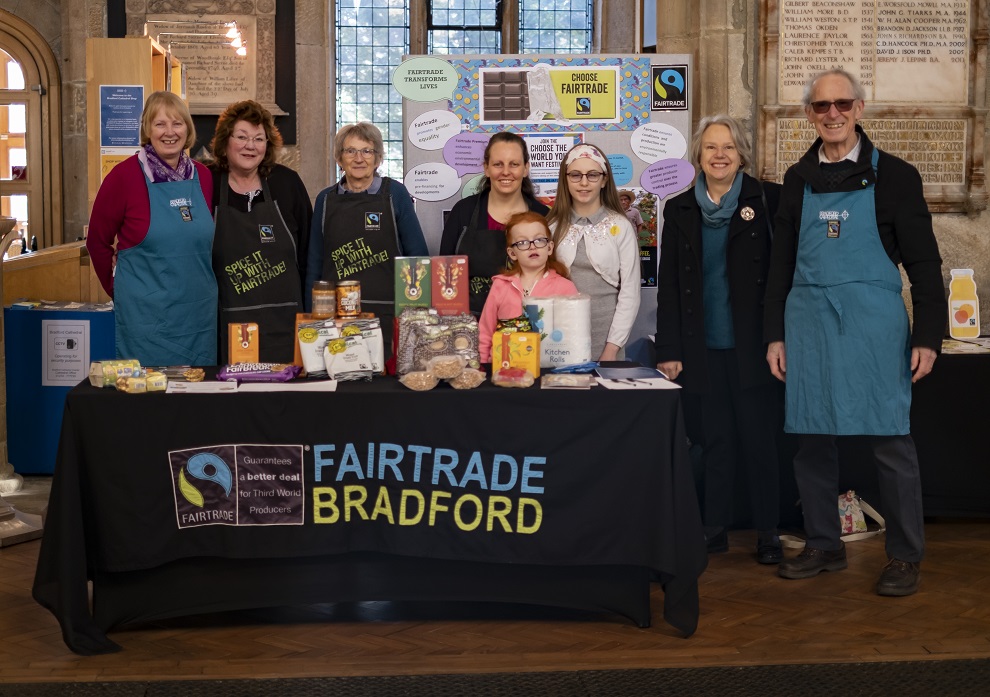
Fairtrade Pocklington will have a produce and gift stall, and give out leaflets on where to find Fairtrade goods in Pocklington, at the Pocklington Christmas Festival on Sunday, 23rd November, from 1pm-5pm, in the Market Place / Market Street.

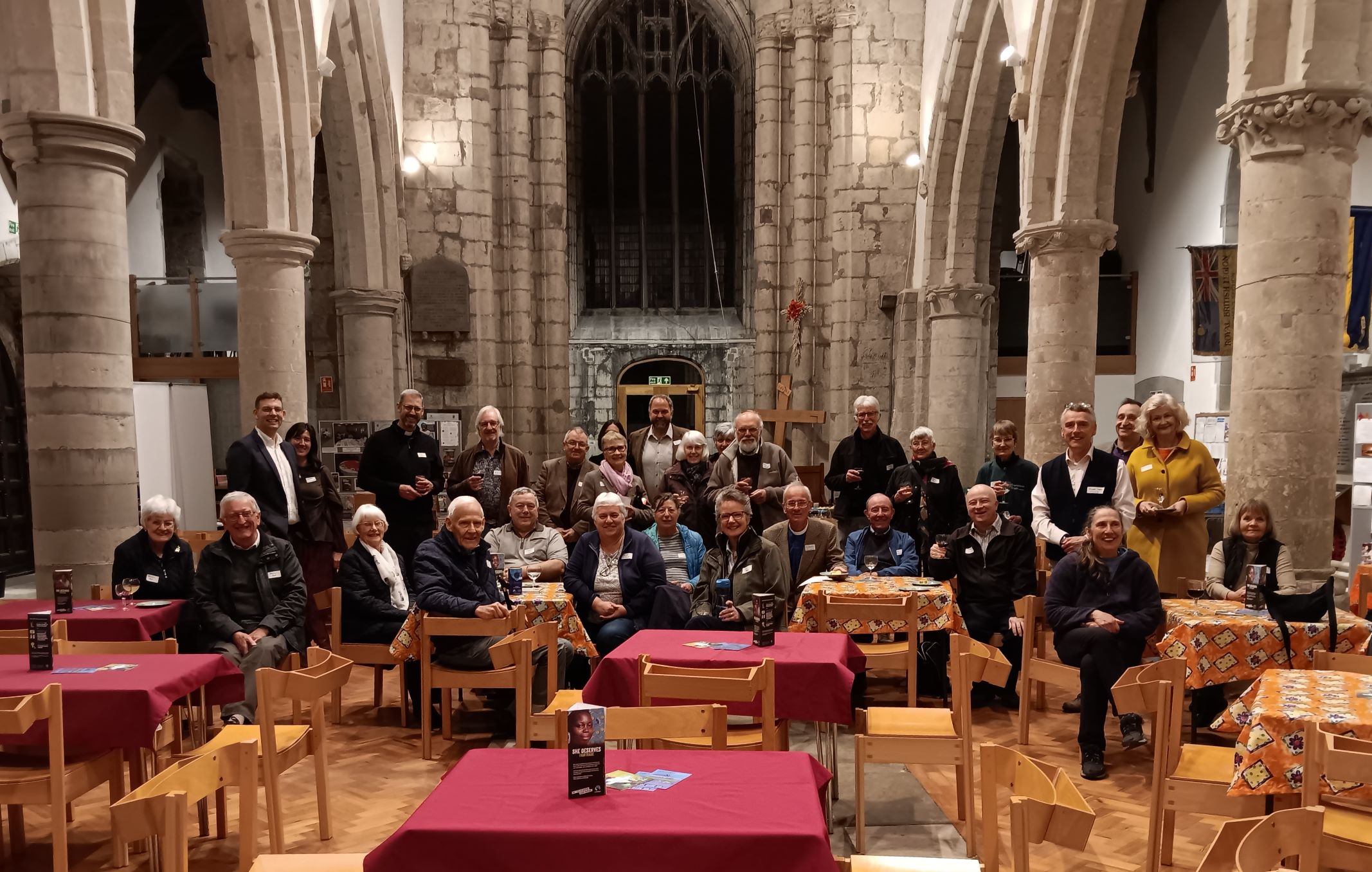
Fairtrade event in All Saints Church, Pocklington

Fairtrade Pocklington will sponsor a Christmas Tree at the Festival in All Saints Church from 28th November until 11th December. The Fairtrade Christmas Tree will be decorated by young people from the Young People Count group in Pocklington.

In addition to regular Fairtrade stalls at All Saints Church and St Mary and St Joseph’s Church, Fairtrade Pocklington will host produce and gift stalls at:

“Handmade in Huggate” Christmas Fair on 15th November 10am-4pm at St Mary’s Church, Huggate.

and All Saints Church Christmas Craft Fair on 29th November, 10am-2pm at All Saints, Pocklington.


Posted on October 19th, 2025 by Fairtrade Yorkshire News

Fairtrade Fortnight Resources for Churches

The organisation Christian Concern for One World has produced a suite of Fairtrade Fortnight resources for churches. The materials offer information for services as well as general information about Fairtrade, Fairtrade Fortnight and possible activities.

The main resource can be downloaded from the Christian Concern for One World website

Prayer and preaching resources, including a reflection on tea, can be found at: Prayer, preaching and study – Christian Concern for One World.

Posted on September 12th, 2025 by Fairtrade Yorkshire News

Bradford Brew

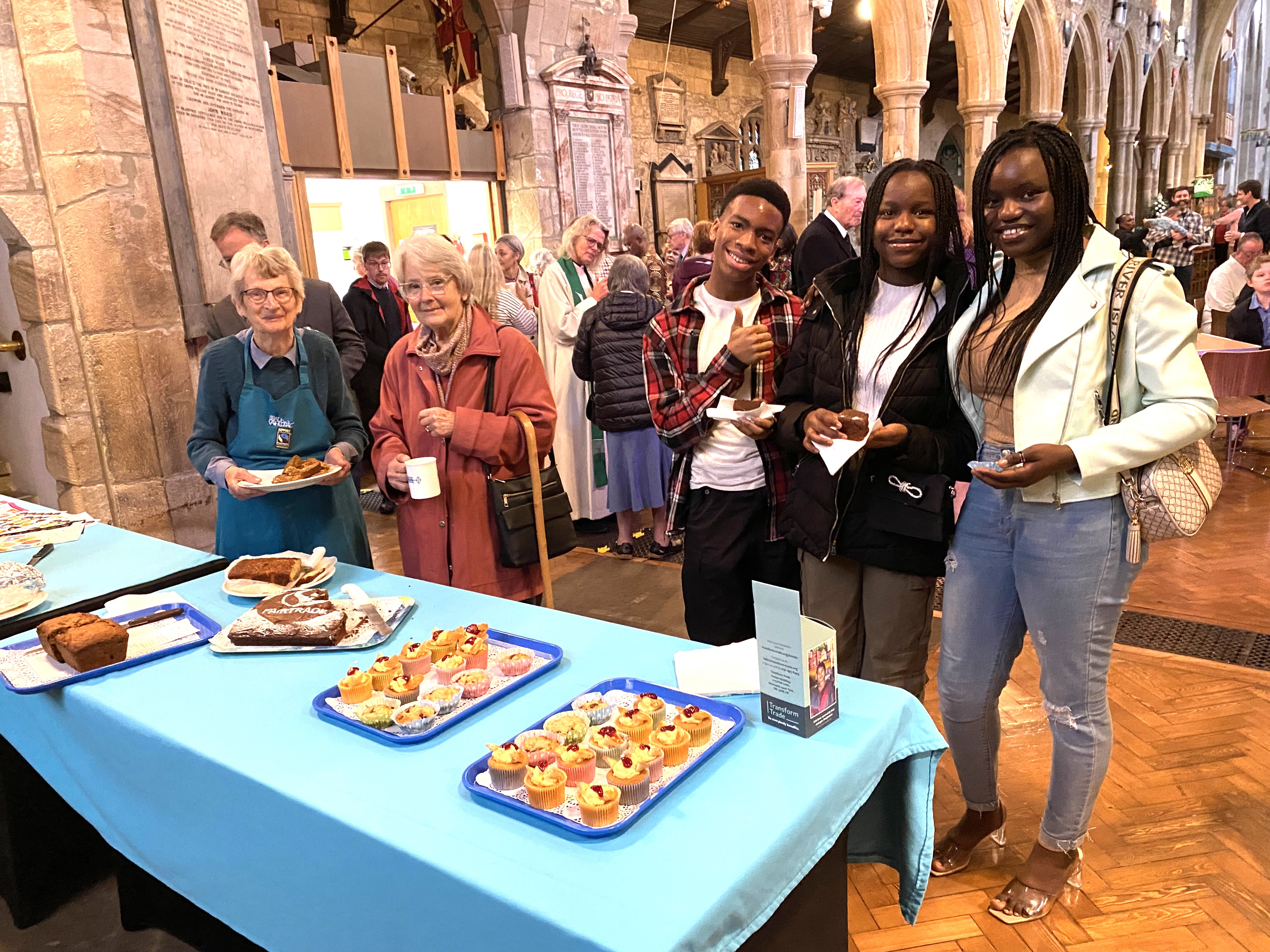
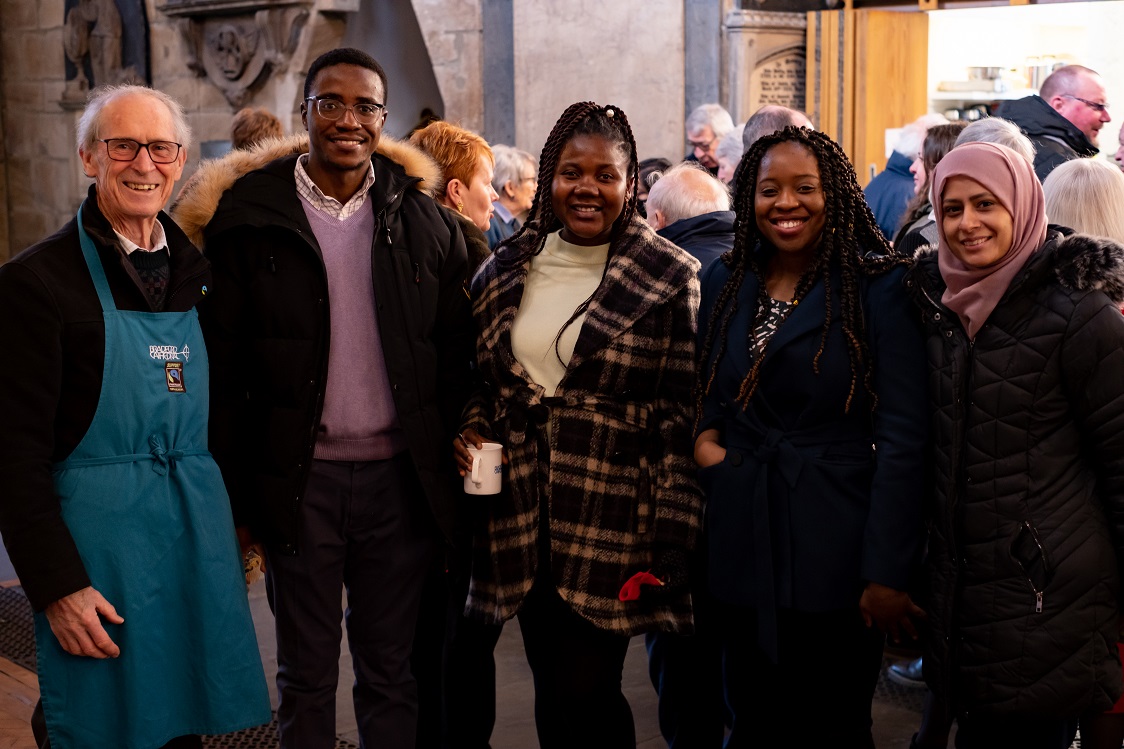
Bradford Cathedral celebrated Fairtrade Fortnight with their third annual Big Brew. Members of the congregation enjoyed Fairtrade tea, coffee and cake and took part in a quiz, responding to questions about the changing circumstances of different Fairtrade producers.

Sunday 22nd September marked the close of Fairtrade Fortnight 2024. It’s 30 years since products first hit the shelves with the Fairtrade mark, and this year those taking part were asked to BE THE CHANGE by choosing Fairtrade.

The Revd Canon Ned Lunn, Canon for Intercultural Mission and the Arts, says:

“Keeping the complex and often overwhelming subject of global trade justice and the role our consumption levels contribute to climate change is an ongoing task. This was our third Big Brew and our involvement in Fairtrade as Bradford Cathedral dates back around twenty years, but we can’t rest on our laurels. Our congregation, like many others, want to be engaged in this work but there are so many other competing issues to be involved it would be understandable to let this slip from their priorities. They did, however, participate in this year’s Big Brew with generosity and enthusiasm.

What we are learning, as the Eco Group, is that little and often is the way to keep this important topic as part of the conversation. As we celebrate 30 years of the mark, we look forward to supporting Fairtrade organisations, like Transform Trade, for another 30 years!”

Posted on September 30th, 2024 by Fairtrade Yorkshire News

Cathedral Commended

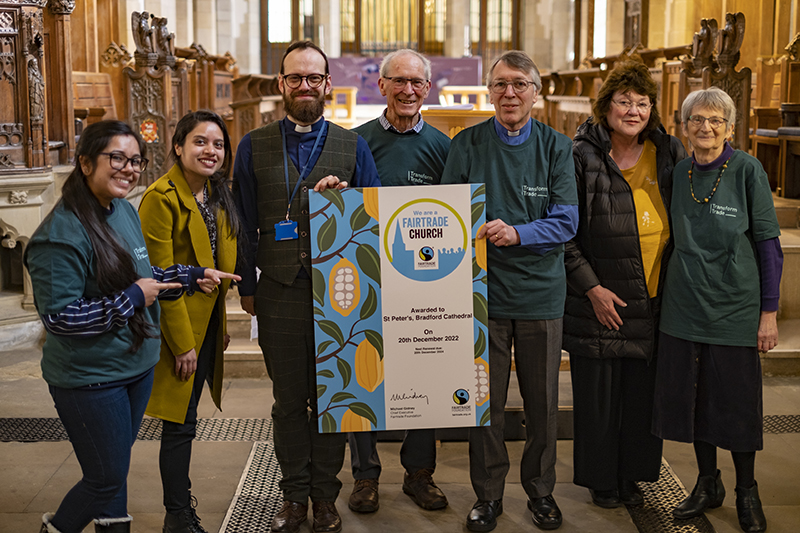
Bradford Cathedral has been commended by the Fairtrade Foundation with the confirmation of its status as a ‘Fairtrade Church.’

This is valid for the next two years, the Cathedral having held the status since 2007.

Mike de Villiers of the Cathedral’s EcoGroup says:

“The Fairtrade Foundation has recognised Bradford Cathedral as a Fairtrade church, which recognises us for the Fairtrade products that we offer and our promotion of Fairtrade.”

The Revd Ned Lunn, Canon for Intercultural Mission and the Arts, says:

“We’re delighted that once again we have been awarded Fairtrade Church status.”

“This recognises the sustained passion and commitment Bradford Cathedral has shown over the years to seeking to live equitably with brothers and sisters across the globe as an expression of God’s justice and love for all people.”


Posted on March 26th, 2023 by Fairtrade Yorkshire News

Big Brew in Bradford

Sunday 27 at Bradford Cathedral a Big Brew was held to raise funds for Traidcraft Exchange, an organisation supporting producers in low-income countries.  This event took place after morning service and was well attended.  Fairtrade drinks were served with a range of cakes and biscuits while instructive films about Fairtrade producers were screened.  A group of students from Bradford University Fairtrade Group were also at this well-attended event.

Posted on March 20th, 2022 by Fairtrade Yorkshire News

Fair Trade Lent Resources 2022

Here are some great Fair Trade Lent resources, devised by our friends at Fairtrade Australia and New Zealand.

These Resources are based on the Revised Common Lectionary used by many Churches around the world. The Bible passage links are to the Lectionary page of the Anglican Church.


First Sunday of Lent 2022

Deuteronomy 26:1-11
Romans 10:8b-13
Luke 4:1-13
Psalm 91:1-2, 9-16
The Temptations of Jesus. Luke 4:1-13


All four Gospels record the Temptations of Jesus. In the wilderness, Jesus was tempted without succumbing and then he was free to commence his ministry.


Before we look at the three Temptations of Jesus in Luke 4. we notice that during the Temptations Jesus had a constant companion. In verse one we read ‘Jesus returned from the Jordan full of the Holy Spirit and was led by the Holy Spirit into the desert.’


For Christ and for us it is good to remember that in the midst of the most severe temptation the Holy Spirit is present.


Three temptations: Stones into bread. Power over the whole world and the wealth that goes with that. And a spectacular Bungie jump from the temple with angels as the elastic rope.


Three temptations. 1. The satisfying of hunger. 2. Domination over the whole world. Global government. 3. A spectacular headline grabber.


And Jesus said No! No! No!


It is great that Jesus was not led astray by the Temptation. The writer to the Hebrews could say:


Since, then, we have a great high priest who has passed through the heavens, Jesus, the Son of God, let us hold fast to our confession. 15For we do not have a high priest who is unable to sympathize with our weaknesses, but we have one who in every respect has been tempted as we are, yet without sin. (Hebrews 4:14,15 NRSV)


There are many forms of temptation which we are called to resist.


Subtle amongst these and probably not often considered might be the temptation to take the cheapest and easiest option when buying products such as tea, coffee, chocolate, or clothing.


Temptation away from Fair Trade. We may be aware of the importance of Fair Trade, how it helps people with a decent wage and working conditions, free of slavery and ensuring general equality and caring for the environment, but sometimes it might be too hard. We must hunt on the supermarket shelves, or even go to another store for the Fair Trade basics: tea, coffee, chocolate. We must search through various Ethical shopping or fashion guides to find the clothes produced according to the 10 Principles of Fair Trade, even then it is difficult.


I think the biggest temptation in Fair Trade is to give up. It’s too hard …


As we commence Lent, many people will give up something. Here’s a suggestion. How about giving up non Fair Trade products, and switch to Fair Trade. That way you can keep consuming chocolate or coffee, with an easy conscience and with the satisfaction of the knowledge that you are supporting producers in distant places towards a healthy sustainable lifestyle.


Now is the time to look beyond Lent for Fair Trade chocolate Easter eggs for Easter Day.


Prayer


Loving and forgiving God,

We thank you that Jesus, although severely tempted did not give in.

Help us to resist temptation in all areas of life;

Help us to resist the temptations that may pull us from what we know to be just and fair for the workers of the world in order to make life easier for us.


Thank you Lord,


Amen.

Posted on February 26th, 2022 by Fairtrade Yorkshire News

Second Sunday of Lent

Genesis 15:1-12,17-18
Philippians 3:17-4:1
Luke 13:31-35
Psalm 27
‘Jerusalem, Jerusalem, the city that kills the prophets and stones those who are sent to it! How often have I desired to gather your children together as a hen gathers her brood under her wings, and you were not willing! (Luke 13:34)


With Martin Luther King being assassinated so long ago (6.4.1968) and Desmond Tutu dying late last year (26.12.2021) it is hard to believe they were contemporaries. King was born in 1929, Tutu in 1931.


Both are seen as great prophets of the 20th Century, each addressing injustices in their own context and beyond. One was assassinated at the age of 39. The other lived a long life but suffered many character assassinations for his stand on issues of social justice.


The great Old Testament prophets suffered their share of ill treatment, and Jesus, when he uttered those words knew he would be next but one. John the Baptist was next.


The Church is called to be prophetic in the face of social injustices of our day. Seeking to please everyone, to not rock the boat and fearful of upsetting and losing members, much of today’s preaching avoids confronting governments or business with the result we lose the prophetic edge.


Much of the world trading is based on maximising profits and minimising inputs which includes paying workers as little as possible, far below a living wage. Fair Trade is joining the prophets in saying this is wrong.


Guided by the great Old Testament prophets, Jesus himself and the 10 Principles of Fair Trade we can take prophetic action to ensure justice and fairness in the trading system.


With the mother hen image, Jesus showed great love and compassion for the people of the city of Jerusalem. A characteristic of prophets is their strong words for justice are driven by great love for people. A book of Martin Luther King’s sermons is entitled ‘Strength to Love’ with a photo of King in earnest prayer for the people on the cover. We can picture Desmond Tutu weeping for the oppressed people of South Africa.


Prophetic acts of justice such as appealing to people to purchase Fair Trade are motivated by a desire to improve the lives of people, mostly unseen, in distant lands. This is passionate love working at a distant.


Reflect on your situation. Where are the prophetic voices in your community calling for justice?


‘Injustice anywhere is a threat to justice everywhere’.   (Martin Luther King Jr)


‘If you are neutral in situations of injustice, you have chosen the side of the oppressor’.   (Desmond Tutu)


Prayer


Loving God,

We thank you for the voices and actions of the prophets calling us to faith.

Thank you for those prophets of long ago, recent times, and among us now calling us to action for people and the environment.

Thank you for the voice of Fair Trade calling on a realignment of world trading practices to benefit all parties.

Amen.

Posted on February 26th, 2022 by Fairtrade Yorkshire News

Third Sunday of Lent

Exodus 3:1-15
1 Corinthians 10:1-13
Luke 13:1-9
Psalm 63:1-8
Exodus 3:1-15

Exodus 3:1-15.

Then the Lord said, “I have observed the misery of my people who are in Egypt; I have heard their cry on account of their taskmasters. Indeed, I know their sufferings, and I have come down to deliver them from the Egyptians …” (Exodus 3:7,8a)


When we think of the account of Moses before the burning bush we often focus on Moses and his response.


Moses, peacefully caring for his Father in Law’s sheep had his tranquillity disrupted by God’s instructions for him to lead His people from slavery in Egypt to a land of freedom.


The key words in this passage are not to do with the bush that burns and is not consumed, it is not how inadequate Moses may feel. The key message is that God has heard the cry of his people who are miserable and suffering in slavery in Egypt. The rest of the book of Exodus is about how those people were released, how they wandered in the wilderness and were eventually ready to enter the land of Canaan.


The important message is that God has heard the cry of his people and is to use Moses to lead them to freedom.


This was an important theme for the Israelites. We often overlook the introductory words from God when Moses later received the Ten Commandments: “I am the Lord your God, who brought you out of the land of Egypt, out of the house of slavery,…” (Ex 20:2)


The point of all this for us is that God still hears the voices of those who are in slavery across the world, estimated at 46 million people across 167 countries. In addition, there are 160 million child labourers.


No 5 of the 10 Principles of Fair Trade is ‘No child labour. No forced labour’


The Fair Trade Association is committed to these 10 principles and works in cooperation with organisations like Be Slavery Free.


Reflection


In Exodus God heard the cry of His people. The question is, do we hear the cry and what steps are we taking to respond to that cry?


.

Look at how we can take action through organisations such as Be Slavery Free https://beslaveryfree.com/


Prayer


Listening God,

You heard the cry of your people in slavery in Egypt.

You hear the cries of those in slavery and child workers in the world today.

Help us to hear those cries.

Give us the courage and wisdom to act.

Amen.


Posted on February 26th, 2022 by Fairtrade Yorkshire News

Fourth Sunday of Lent

Joshua 5:9-12
2 Corinthians 5:16-21
Luke 15:1-3, 11b-32
Psalm 32

Luke 15:11b-32 is perhaps one of the best-known parables of Jesus. It’s main point, perhaps its one point is the extravagant, generous, forgiving love of God. The parable is about a selfish spendthrift younger brother and a dutiful passive-aggressive older brother and their Father. It takes place in the context of a wealthy Jewish household amidst the religious and social milieu of the first century as a response to the grumbling of the Pharisees and the scribes (verse 2)


Depending on our emphasis we can call it ‘The parable of … the loving (or forgiving father), … the lost son, … the two brothers, … the lost sons’ etc.


Reread the parable taking particular note of what is said about workers and those who employ them.


After the money had run out the younger brother ‘hired himself out’ to a non-Jewish, Gentile farmer in a ‘distant country’. (v 15) This hiring arrangement seems hardly fair, when the son is so hungry, he envies the pigs’ dinner. (v 16) Better off to be a ‘hired hand’ back home where they ‘have bread enough and to spare’ (v 17). Those well off workers are later described as ‘slaves’ (v 22). The hired hands or slaves in the father’s house have enough and to spare (v 17) That is the perception of the younger son who is starving. Taking the image of the enterprise as being the household of God we can deduce that God wants his workers to be well looked after, with sufficient and to spare.


By contrast, in the far country, this young Jewish man has made himself into a non-citizen. There were several occupations which were prohibited to Jewish people. Among these were some of the people Jesus mixed with: prostitutes and tax collectors. Even the shepherds in the birth story would be included. Keeping or feeding pigs was an occupation certain to render a person ‘unclean’ and make them a non-citizen.


The older son saw himself as a slave (v 29), rather than the inheritor of a great estate, although somewhat diminished now that the younger son had wasted his share.


The waiting, running, forgiving, extravagant, ‘not listening to excuses’, Father shows he unconditionally accepts this son who has become a non-person by his actions. The treatment of the younger son is symbolic of treatment everyone can receive.


All people are loved in this way. We are all, the Gentile in the ‘distant county’, the prostitutes, tax collectors and non-Jewish sinners, the Pharisees and scribes, all people on earth are equally offered the forgiving love by this apparently bizarre Father.


And in this Father’s household no one is a slave as the older brother saw himself, all have enough and to spare as the younger brother perceived the ‘hired workers’ back home.


Reflection


If this is the way God treats each of us, ought we not treat all the people who serve us, such as the workers who produce our goods, with the same attitude of love?


Prayer


Loving, extravagant, generous God,

We thank you for your forgiveness as you welcome us into your Household.

Help us to see people as you see them, with watchful love and forgiveness.

Help us to treat people with dignity as we seek to remunerate all workers, so they have enough and to spare.

Amen


Posted on February 26th, 2022 by Fairtrade Yorkshire News

5th Sunday of Lent

Isaiah 43:16-21
Philippians 3:4b-14
John 12:1-8
Psalm 126
John 12:1-8


This remarkable act of Mary at the home she shared with her sister Martha and brother Lazarus in the presence of Jesus and his disciples opened wide the eyes of all those gathered that day.


Attending to feet was the work of a slave. No self-respecting lady would unbind her hair at dinner.


Cutting across conventions, Mary took half a litre of very expensive perfume and poured it all over Jesus’ feet, then wiped his feet with her hair.


Whether Mary was fully aware of what she was doing we don’t know. But Jesus interpreted that action as anointing in preparation for his burial.


Someone saw it differently. Judas reacted quickly:  “Why wasn’t this perfume sold for 300 silver coins and the money given to the poor?” (John 12:5)


Judas probably thought Mary to be a fool to be so extravagant


We might think Judas’ reaction was because he had a genuine interest in the poor. But John’s footnote tells us that he was the treasurer and a thief who helped himself to the moneybag.


Jesus concluded this little scene with words which I believe have been often misinterpreted.


7Jesus said, ‘Leave her alone. She bought it so that she might keep it for the day of my burial. 8You always have the poor with you, but you do not always have me.’


Many people have interpreted that to mean that it’s OK to spend money extravagantly on beautiful churches, stained glass windows, pipe organs and so on. After all we are doing this for Jesus.


What I believe Jesus was saying is this.


“There will always be poor people to help, and it is good and right that you help them in every way.

For this one time, and for this one time only, Mary has done a beautiful thing. She has anointed me in preparation for my burial. She has done this now and this loving act can only be done once.”


“In the future,” I believe Jesus is saying, “you will have plenty of poor people to help and it is good and right that you should help them.”


Jesus was saying. “This is OK for Mary, but for you and the church in the future you can better spend money by giving to the poor”.


The sad thing is that Jesus was aware that there would always be poor people. In spite of his teaching about sharing coats and feeding the hungry and caring for the needy, Jesus knew that it was part of our self-centred nature to so structure the world that there would always be poor people.


The economic heap would be so structured that there would always be poor people at the bottom.


Sharing our resources, giving to causes which help the poor are worthwhile.


Fair Trade is a way we can re-structure the world.


Reflection


Consider that the most beautiful thing you can do for Jesus is to give to the poor and to ensure that the workers behind the products you purchase were treated according to the 10 Principles of Fair Trade.


As Jesus said: “I tell you whenever you did this for one of the least important brothers or sisters of mine, you did it for me!” (Matthew 25:40)


Prayer


Loving God, we thank you for the once and for all extravagant act of love performed by Mary of Bethany.

Help us to similarly show our love to you by our generous acts of love towards people in lower income countries.

Show us how, through Fair Trade, we can alleviate poverty.

Amen

><> ><> ><> ><> ><> ><> ><> ><> ><> ><>
 

Posted on February 26th, 2022 by Fairtrade Yorkshire News